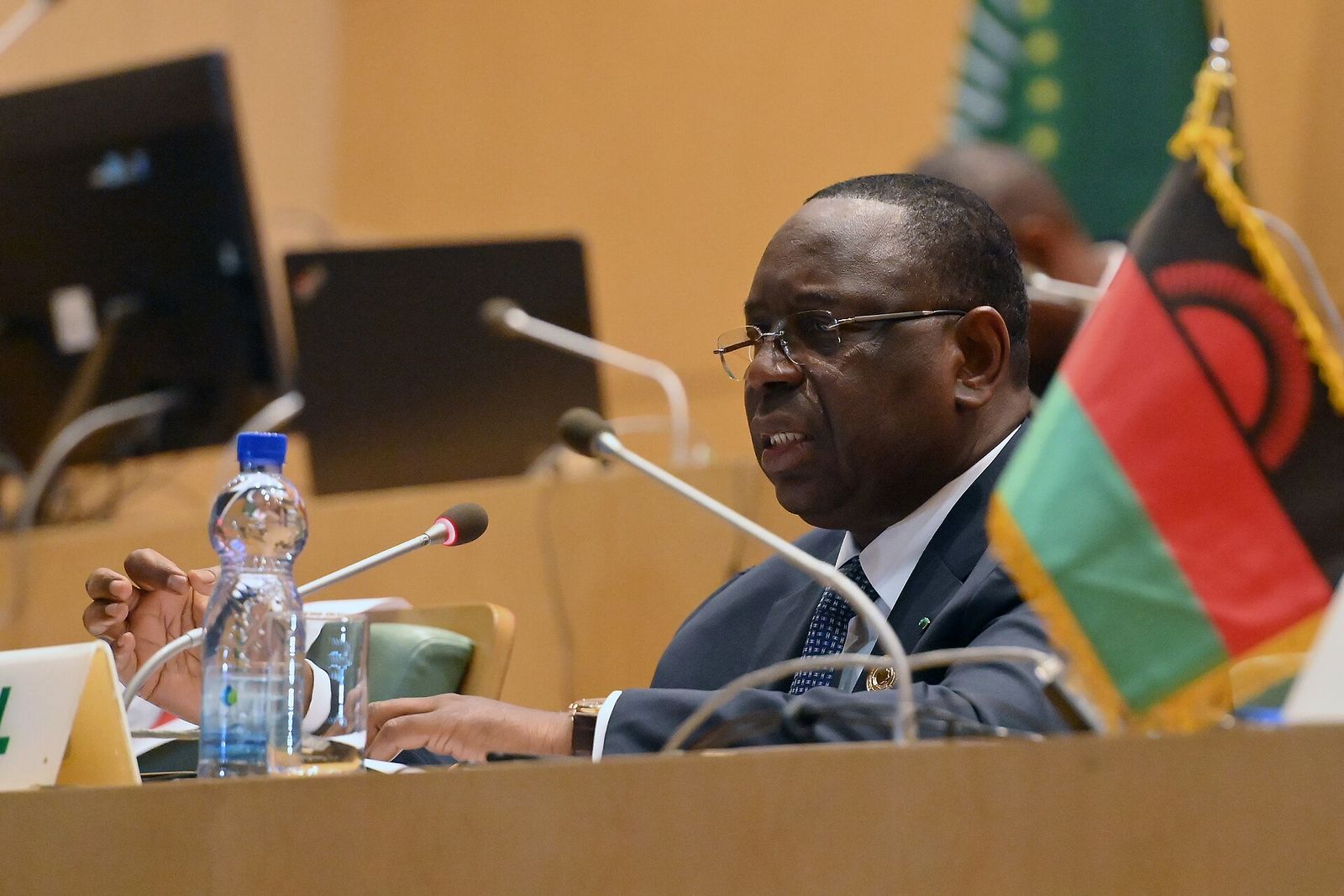
As the Security Council phase opens, the question facing President Macky Sall's candidacy is how legitimacy becomes influence. The only declared African candidate to succeed António Guterres, he carries the voice of a continent that today hosts the largest number of UN peacekeeping operations, and that has not held the office of Secretary-General since Kofi Annan, between 1997 and 2006.
Legitimacy rests first on the facts. Africa brings together fifty-four member states, more than a quarter of the General Assembly, and it is the setting where most peace and security mandates play out. An experienced African candidacy answers that reality, a matter less of rotation than of fit between the candidate's profile and the Organisation's challenges.
Experience gives this legitimacy its foundation: twelve years as Head of State, the chairmanship of the African Union in 2022, the continent's voice carried through the food, health and energy crises. It is this practice of multilateral negotiation that underpins the candidate's vision: an inclusive, impartial and action-oriented United Nations, attentive to every member state, large and small.
But legitimacy becomes influence only at the Security Council. Its fifteen members hold their first straw polls in the last week of July, gauging support for each candidacy before the recommendation to the General Assembly. Senegal's official support, announced on 20 July, gives the candidacy its national foundation: the Government and Senegal's entire diplomatic network carry the message to the capitals and to New York.
Six candidacies have been submitted to date. The coming week will tell whether continental legitimacy translates into support at the Council. The race remains open, and no clear front-runner has emerged.
Africa at its heart, the world in its sights.
Learn more: www.mackysall.net