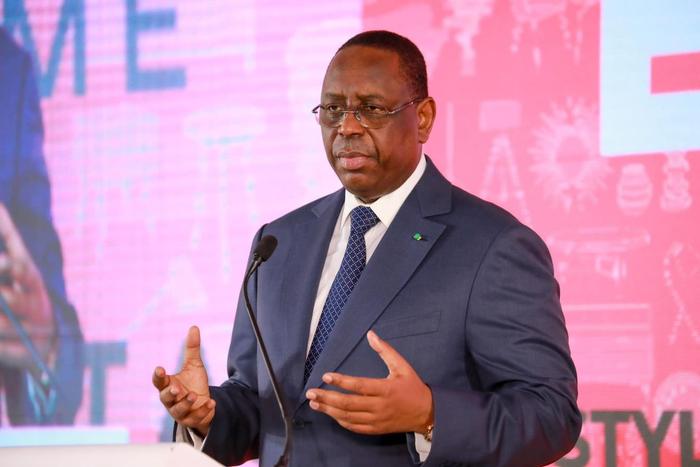
On 23 July, in the General Assembly Hall, the six candidates for UN Secretary-General appeared at the same tribune to answer the same questions. Organised by the Office of the President of the General Assembly with the support of Bloomberg and broadcast live on UN Web TV, the exercise brought the contenders to succeed António Guterres before delegations, UN staff and civil society for the first time.
President Macky Sall defended a simple conviction: the next Secretary-General's first task will be to restore trust. Trust between member states, large and small; trust between the Organisation and the peoples it serves. That restoration runs, he argued, through an impartial UN, beholden to no bloc, and through a firm commitment to preventive diplomacy: acting before crises erupt rather than managing their aftermath.
On reform, the candidate recalled the foundations of his vision: an integrated approach to peace, security and development; a renewed multilateralism, faithful to the Charter and its three pillars; a streamlined Organisation, able to do better with less; and a method built on listening to every member state, without exception. To this he adds an openness to partnerships with civil society, young people and the private sector.
The only African candidate in the race, nominated by Burundi on 2 March 2026, President Macky Sall has carried Senegal's official candidacy since 20 July. Africa has not held the office of Secretary-General since Kofi Annan; experience gives the ambition its foundation: twelve years as Head of State, the chairmanship of the African Union in 2022, the continent's voice in the food, health and energy crises.
With the town hall behind them, the race now moves to the Security Council, whose fifteen members hold their first straw polls in the last week of July. Six candidacies have been submitted to date, and no clear front-runner has emerged. The next Secretary-General's term begins on 1 January 2027.
Africa at its heart, the world in its sights.
Learn more: www.mackysall.net